Redefining Profit: How Purpose Can Reshape Capitalism
Capitalism’s undisputed merit, particularly after World War II, has been its ability to accelerate income growth and significantly reduce global poverty.
Yet its greatest limitation remains wealth inequality, creating a deeply divided world increasingly marked by environmental degradation, social exclusion, political divisiveness, and mistrust.
The good news: organizations of any size can reshape capitalism by rethinking the purpose of business.
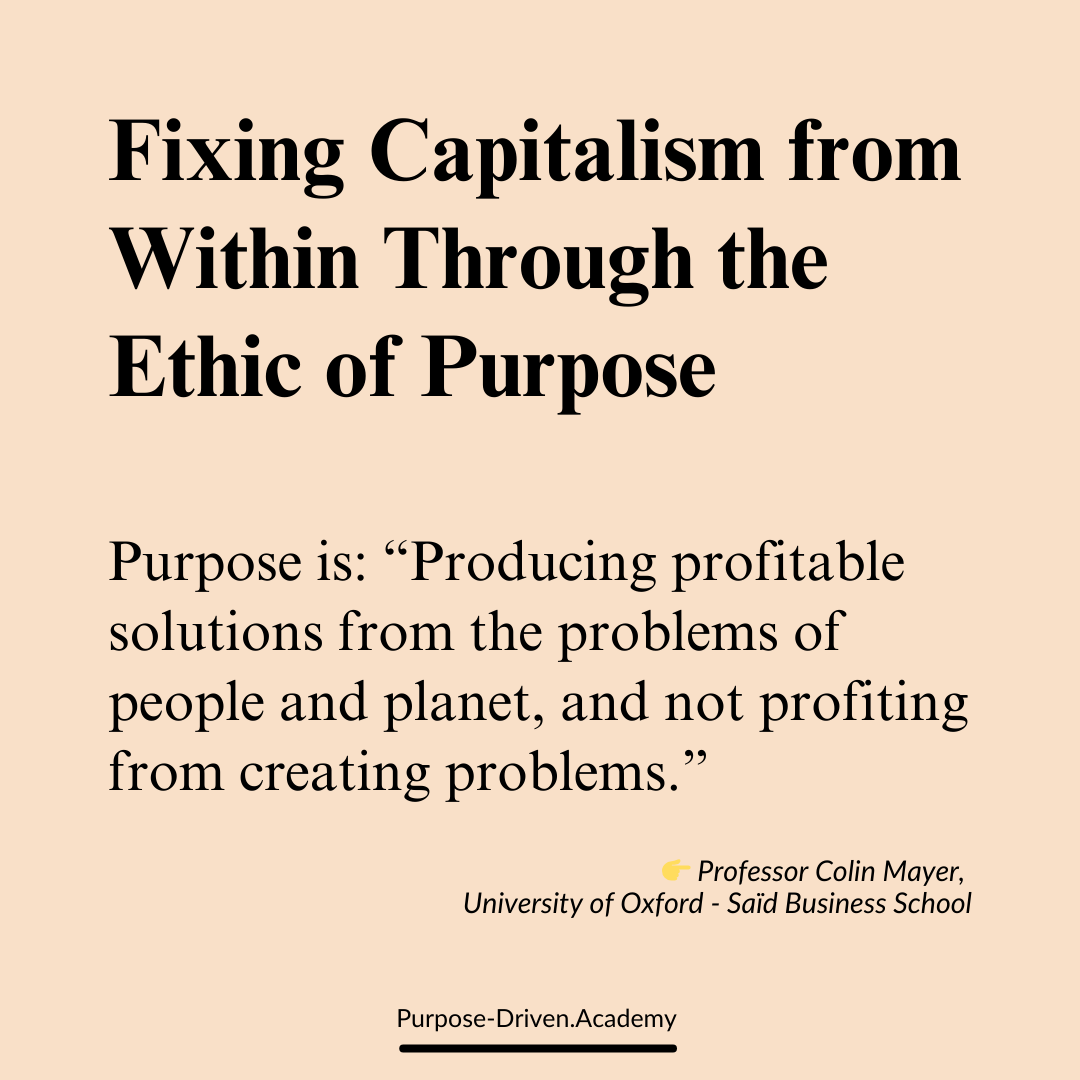
“The purpose of business is to produce profitable solutions to the problems of people and planet, not profit from producing problems,” argues Colin Mayer, professor of management at Oxford's Saïd Business School. In a special issue of the Oxford Review of Economic Policy, Mayer and fellow economists explore capitalism's benefits and flaws.
“There is a growing view that corporations are psychopathic in how they exploit resources at the expense of others,” Mayer observes. This mistrust stems from the belief that business exists solely to generate profit—a notion that has fueled capitalism's failures.
The fundamental flaw is that profit measurement ignores the harm caused by cutting down ancient woodlands, polluting rivers, emitting vast quantities of CO₂, and employing people at exploitative wages.
This is why we must redefine profit around what business can and should be. Organizations should help solve problems for individuals, communities, and the natural world.
Profit should be measured net of costs associated with rectifying, mitigating, and compensating for damage caused to people and the environment.
The challenge is to reinvent business—to reimagine its role within society and rethink how we measure profit. Combined with proper governance, this will transform how entrepreneurs lead their organizations to produce profitable solutions to the world's problems.