

Purpose is the organization’s OS
From statements to the human operating system.
A few days ago, during a meeting with a leadership team, I asked a simple question: “What will you do differently tomorrow morning if your purpose is real?” Silence in the room.
This is where most organizations get stuck. Not because they lack purpose, but because they treat it as a statement instead of pure management innovation, the beating heart of the human operating system. And, as a consequence, they fail to practice it as a daily discipline.
Culture is often described as something intangible, something we can feel but not design. Yet, when we observe organizations over time, culture becomes extremely concrete. It shows up in how decisions are made, how priorities are set, how people interact, how resources are allocated, and how trade-offs are handled.
Culture is not what we say. It is what we repeat.
If we want to make this more explicit, we can describe it simply:
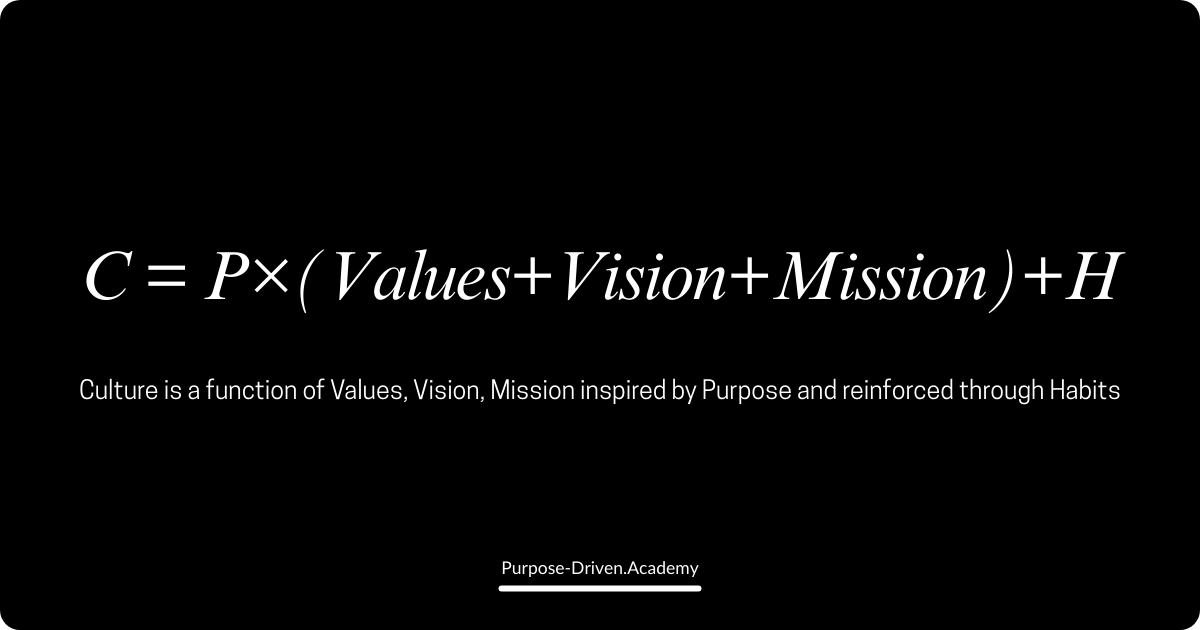
C = P × (Values + Vision + Mission) + Habits
Purpose is the multiplier, not the outcome. Values, vision and mission provide direction, but they remain abstract until they are translated into habits. And habits are nothing more than repeated behaviors embedded in everyday actions.
This is where most purpose-driven initiatives fail.
Organizations invest time and energy in defining purpose, but they do not redesign their operating system accordingly. Decision-making processes, incentives, governance and resource allocation continue to follow a different logic, often driven by short-term priorities.
The natural consequence is that without an execution architecture, purpose remains a theory instead of becoming a discipline.
Misalignment then becomes inevitable. Over time, this gap absorbs energy, slows down execution and erodes trust.
The point is simple: culture is a new business process, not a concept … “nice to have”.
When culture is designed as the human organization’s operating system, alignment is no longer an aspiration. It becomes a consequence. Strategy aligns with purpose. Values become criteria for decision and action. What leaders say is reflected in what people do. And this happens and gets repeated daily.
From this perspective, purpose is no longer about finding a catchy sentence to describe why the organization exists. It is about making it the operating system that aligns values, vision and mission with everyday actions.
In an AI-driven world, where technology handles an increasing share of predictable decisions, this becomes even more relevant.
The question is no longer how efficient our systems are, but what kind of system is guiding and, most importantly, inspiring human decisions?