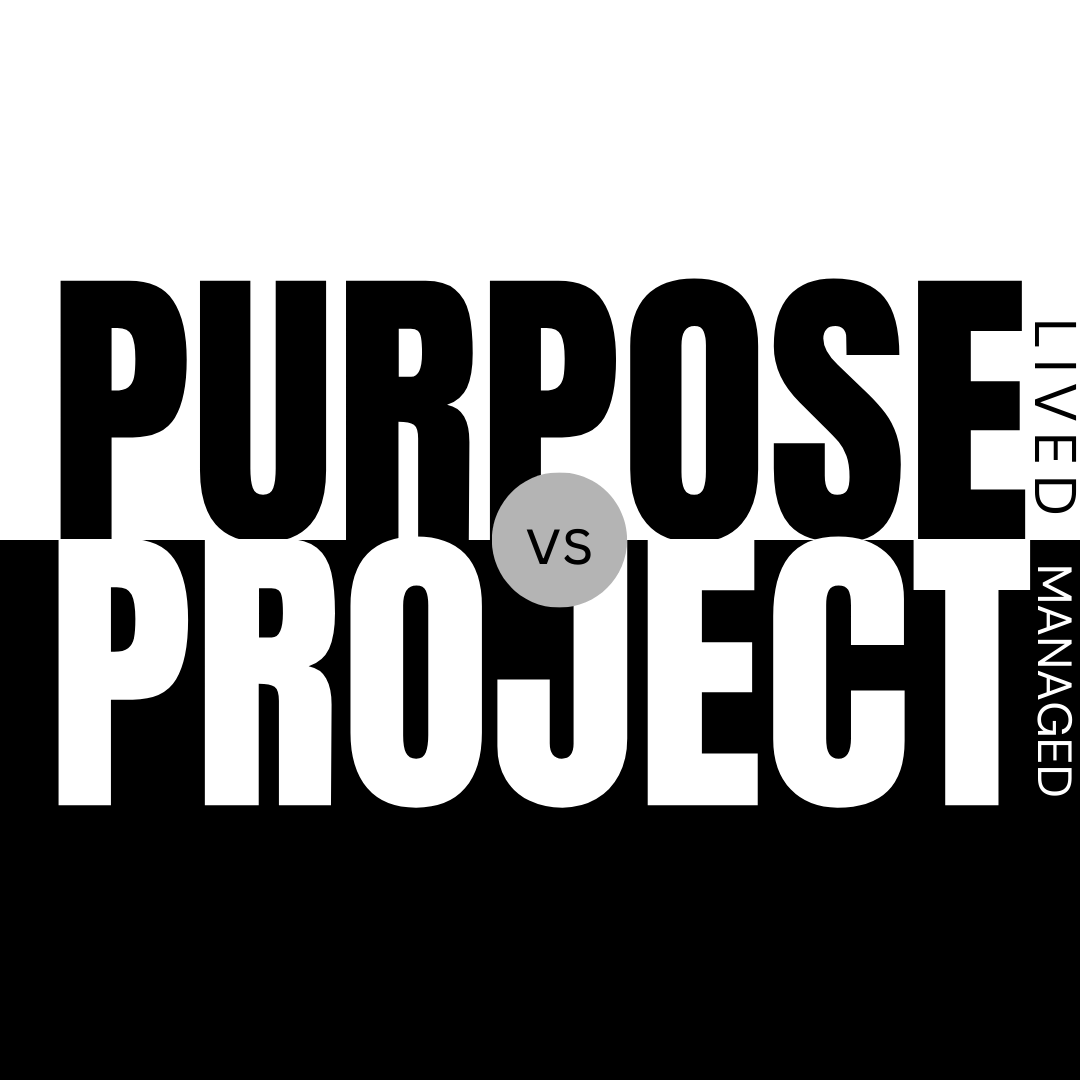
Purpose Fails When It Becomes a Project
Most purpose-designed initiatives fail because organizations treat purpose as a project to complete instead of a daily discipline.
Slogans replace practices. Workshops replace commitment. Deliverables replace the journey.
When this happens, purpose loses its power to orient decisions, shape culture, and sustain long-term value creation.
Purpose is not something “you launch”. It’s something you “live with” every day.
That’s why purpose design cannot be reduced to communication exercises or one-off initiatives. Without a clear set of structural conditions, purpose projects remain abstract and produce no real impact. Miss just one condition, and the entire effort collapses.
Over the years, working with entrepreneurs and leadership teams, one pattern has become evident: purpose only works when it is treated as a system, not as an isolated initiative.
First, purpose cannot be a “nice to have.”
It cannot compete with other initiatives for attention. Purpose must remain above them all, orienting, inspiring, and guiding strategic choices. When it becomes one project among many, it turns decorative. And decoration doesn’t change behavior.
Second, executive sponsorship is non-negotiable. Purpose demands leadership, courage, and long-term responsibility. Not endorsement. Not visibility. Without leaders willing to be tested by what they declare, purpose collapses at the first uncomfortable decision.
Third, when purpose doesn’t resonate, it’s better to stop. If it is not perceived as a lever for growth, scalability, and meaning, forcing it only destroys credibility. Waiting is not failure. Pretending is.
Then comes the part most organizations underestimate.
Purpose is a marathon, not a sprint. It does not emerge from spare moments. It engages people in their full humanity. Purpose-designed initiatives need time, protected spaces, and integration into daily work; without it, purpose simply does not work.
Purpose is an act of courage. Every decision reflects what has been declared, especially when it’s uncomfortable. Transparency becomes reputation. Coherence becomes visible.
Leadership is behavior guided by values and oriented by purpose. This is how organizations create the conditions for people to express their potential and for talent to stay, not through slogans, but through consistency.
Finally, purpose is never “done.” It is a continuous journey that requires daily care, cultivation, and discipline.
Purpose is a proving ground. A test of coherence. Never something to put on display.
For this reason, purpose-designed initiatives are not communication exercises. It is how organizations create value and grow, over time, with integrity.
To support this work in an actionable way, we have distilled these principles into a short manifesto designed for people who want to avoid rhetoric and build purpose-driven cultures that work: Seven Requirements for Building Purpose-Driven Cultures (download it here).